That’s a question I’ve thought about a fair bit. Why head out for this particular remote corner of the world when there were so many untapped frontiers? My thought is that it’s because for Garnett, this was a bit of a known quantity. Remember that the family business was nuts, literally. Brazil Nuts were a specialty of Baker-Bennet-Day Imports, in fact they had the Brazil Nut monopoly for the US until that kind of thing was legislated out of practice. Anyway, it’s likely that Garnett was somewhat familiar with the local logistics which included transport ships sailing into the heart of the Amazon Basin where they were loaded with rubber, coffee, oil, iron, nitrates, as well as other agricultural products. Furthermore, around this time there was a concerted effort to build rail links from the headwater regions of the Amazon over the Andes to the Pacific. One of the proposed routes was in fact through Cochabamba, Bolivia, the stepping off point for the most remote leg of the Collins-Day Expedition. So, I would expect that in the business world this route, down a remote tribal ‘path’ to a town by the name of Todo Santos on the Rio Chappare, may have been quite the talk of the town. Building this railroad was expected to dramatically cut the time and cost of shipping bulk goods, especially raw rubber. I expect there may have been geopolitical factors as well as shipping was dominated by the Brits. A Pacific outlet would have provided goods directly to American West Coast, or the East via the newly opened Panama Canal.
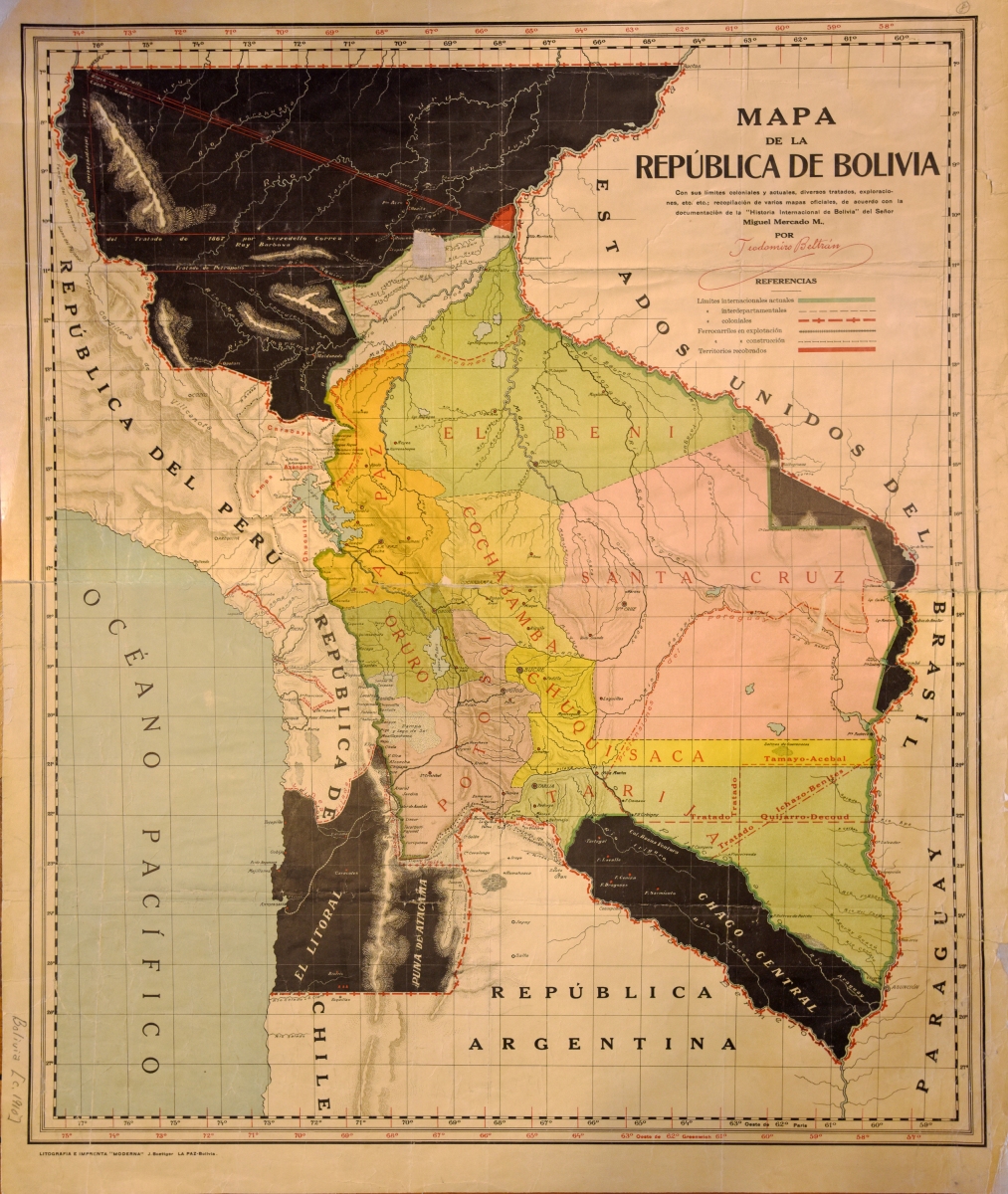
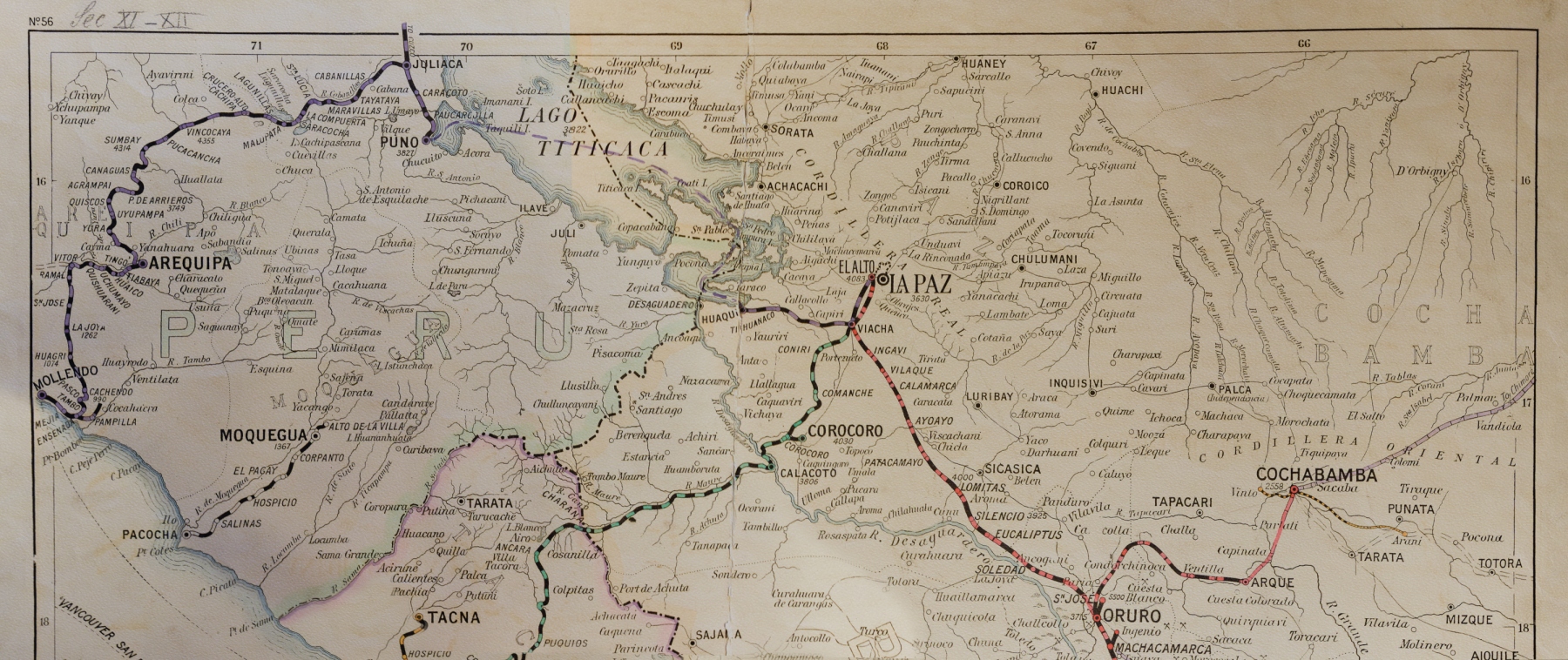
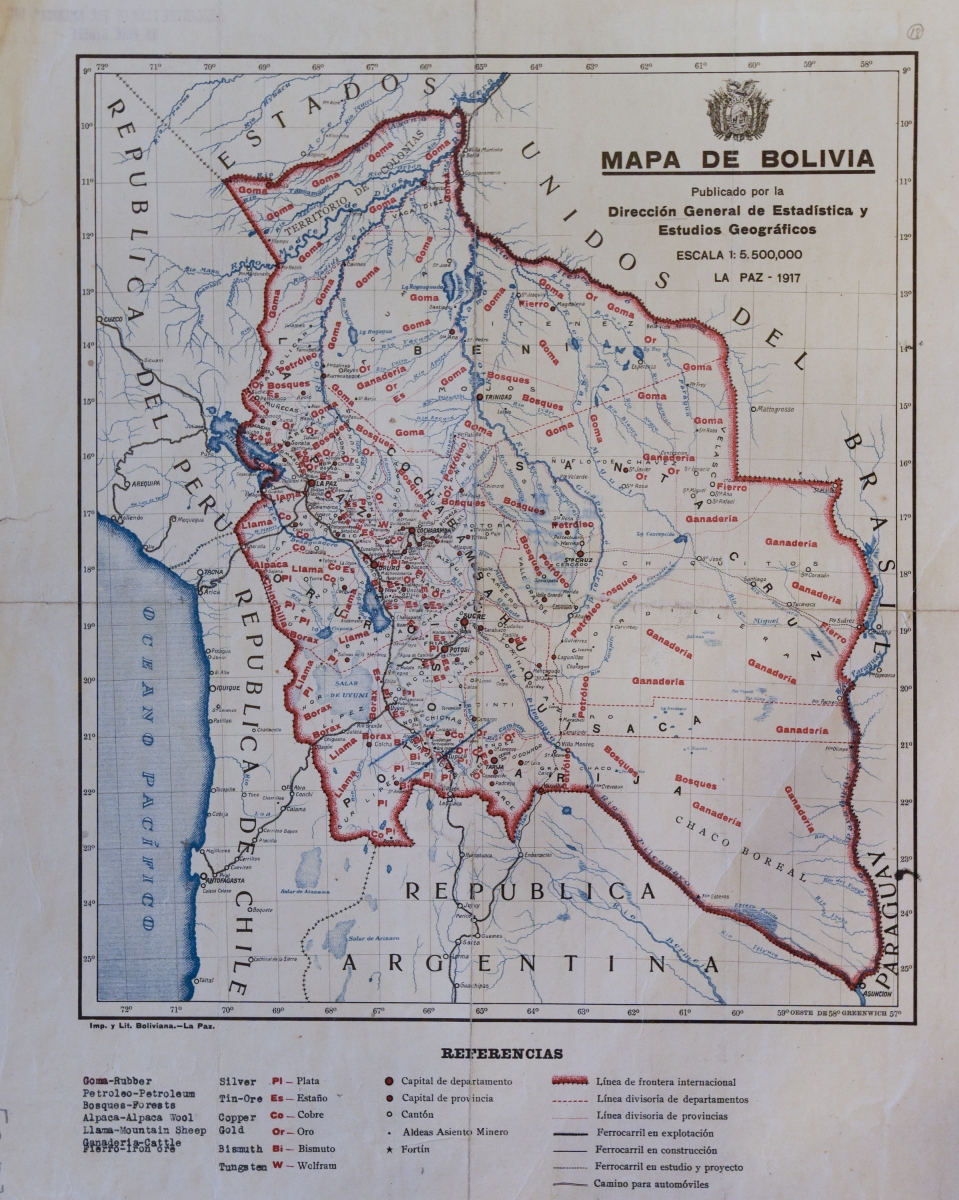
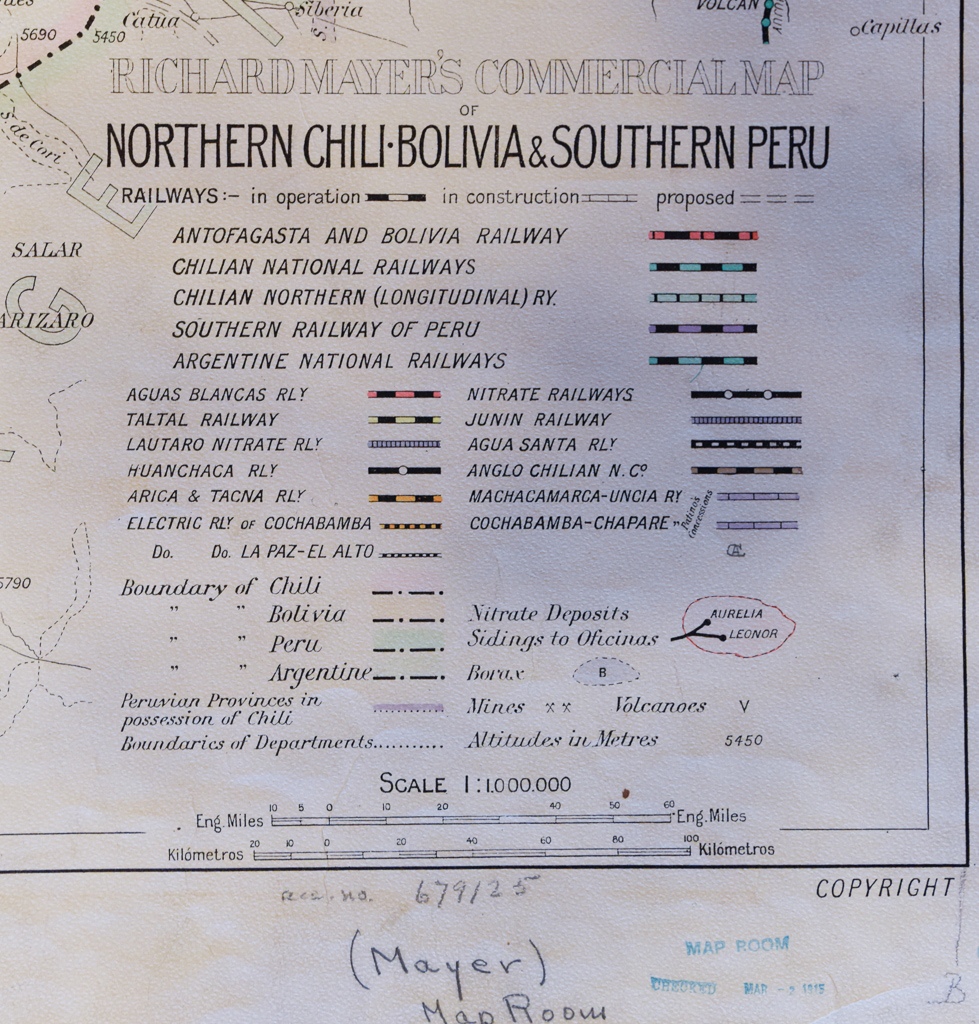
I’ve included some maps here. These are contemporary to the expedition, 1914, 1910 and 1917. The cropped one with an attached legend shows the route/terrain for pretty much the whole trip in Peru-Bolivia, which was initially by train from Molendo, to La Paz then onward to Cochabamba and down to the Amazon. From Garnett’s notes it is clear that the train line from Oruro to Cochabamba ended somewhere near Arque, though they were working on it at the time. This resulted in a ‘horrendous’ trip down the river valley by something along the lines of a stage-coach.
WWI interrupted a lot of commerce, but more important was the invention of synthetic rubber in 1909. Eventually, synthetic rubber destroyed much of the demand for the raw Brazilian rubber, and with it went the business model for these railways. I have seen from Google map aerials that they did a fair bit of tracks the way down to what is now Villa Tunari, a large town straddling the border between the rugged Andes and undulating Amazon rainforest. But it was apparently abandoned before it went into use.

test